We love that you have more questions about midwifery care
What is a Licensed Midwife or Certified Professional Midwife (LM or CPM)?
In Florida, Licensed Midwives are trained healthcare providers who specialize in pregnancy, birth, and postpartum care for healthy, low risk individuals and families.
This pathway to midwifery is centered around out of hospital birth and includes a multi year, intensive education with extensive hands on clinical training. Midwives then complete a national board exam to earn the Certified Professional Midwife credential.
Both of your midwives, Leanna and Brittney, trained and graduated together in 2024 from the Florida School of Traditional Midwifery. Their education is rooted in a traditional midwifery model, blending academic study with apprenticeship style learning. This means they were trained not only in the classroom, but alongside experienced midwives, learning through direct, hands on care in real home and community birth settings.
Their training included in depth study of obstetrics, gynecology, pharmacology, newborn care, and emergency skills, while also attending births, providing prenatal and postpartum care, and developing the clinical judgment needed to recognize both normal, physiologic birth and situations that require a higher level of care.
This shared foundation shapes how they work together, with a consistent approach to safety, trust, and relationship-based care.
Licensed Midwives provide full scope care from pregnancy through postpartum. We work independently while also collaborating with hospital-based providers when needed. At The Village Midwives, our care takes place primarily in the home.
Who do you care for?
We care for individuals and families with healthy, low-risk pregnancies who are seeking a more personal, relationship-based approach to care.
Our model is a good fit for those who want to take an active role in their health and wellness, feel informed in their decisions, and value time and connection with their provider. Many of our clients are drawn to a more intentional approach to pregnancy and are exploring birth outside of the hospital setting.
During your consultation, we review your health history together to make sure midwifery care is a safe and appropriate option for you.
Is home birth safe?
For healthy, low risk pregnancies, planned home birth with trained and experienced midwives is a safe and well supported option.
Research has shown that for low risk individuals, outcomes for planned home birth are comparable to hospital birth, with lower rates of certain interventions. At the same time, all birth carries some level of risk, regardless of setting.
Safety in home birth comes from careful screening, ongoing assessment, and preparation. We are trained in recognizing early signs of complications, managing emergencies such as postpartum hemorrhage and newborn resuscitation, and coordinating transfer to the hospital if needed.
How do I know if I am a good candidate for home birth?
Most people with healthy, uncomplicated pregnancies are good candidates for home birth. The key is that both you and your baby remain low risk, and that we continue to feel confident in the safety of the home setting as your pregnancy progresses.
We look at the full picture together. This includes your overall health, any previous pregnancies or births, and how your current pregnancy is unfolding. This is not a one time decision. We assess throughout your care to make sure home birth continues to be an appropriate option.
Some health conditions or pregnancy developments may shift care outside of what is considered low risk. These can include certain chronic conditions, high blood pressure, diabetes, clotting disorders, or more complex heart conditions. During pregnancy, things like significant concerns on ultrasound, multiples, preeclampsia, or other complications may also change what level of care is safest.
If anything comes up, we talk through it with you clearly and honestly. When needed, we help guide you toward a different plan of care or collaborate with other providers so you continue to be well supported.
The goal is not to fit into a category. The goal is to make sure you are in the safest place for your unique situation.
Do I need to see a doctor during my pregnancy?
For healthy, low risk pregnancies, midwifery care can fully meet your needs. We follow a similar schedule of visits and offer the same standard labs and screenings you would have in a traditional setting, while also providing more time, education, and personalized support.
There is not usually a need to see a physician in addition to your midwife during an uncomplicated pregnancy. If something comes up that falls outside the scope of home birth, we will talk through it with you and, when needed, refer you to a trusted obstetrician, certified nurse midwife, or specialist. We stay involved, communicate with your care team, and help you navigate next steps so your care remains connected and supportive.
Can I switch from a doctor to a Licensed Midwife?
Yes! Many families transfer into midwifery care at different points in pregnancy.
If you are currently receiving care with a physician and are considering a change, we will review your records, talk through your pregnancy so far, and make sure midwifery care is a safe fit for you.
If everything aligns, we will guide you through a smooth transition so your care continues without interruption.
What is the difference between a midwife and a doula?
Midwives and doulas both support families during pregnancy and birth, but their roles are different and complement each other well.
Midwives are licensed medical providers. We are responsible for the clinical care of both parent and baby throughout pregnancy, labor, birth, and postpartum. This includes monitoring health, making medical decisions, providing education, and attending the birth as your primary care provider.
Doulas are support professionals who focus on the emotional and physical experience of birth. They offer hands on comfort measures, encouragement, and steady presence throughout labor, and many also provide postpartum support.
Many families choose to have both a midwife and a doula. We work well together, each bringing a different layer of support. While the midwife holds the clinical care and safety of the birth, the doula provides continuous, hands on support. Together, it creates a more supported and connected birth space.
Who attends the birth?
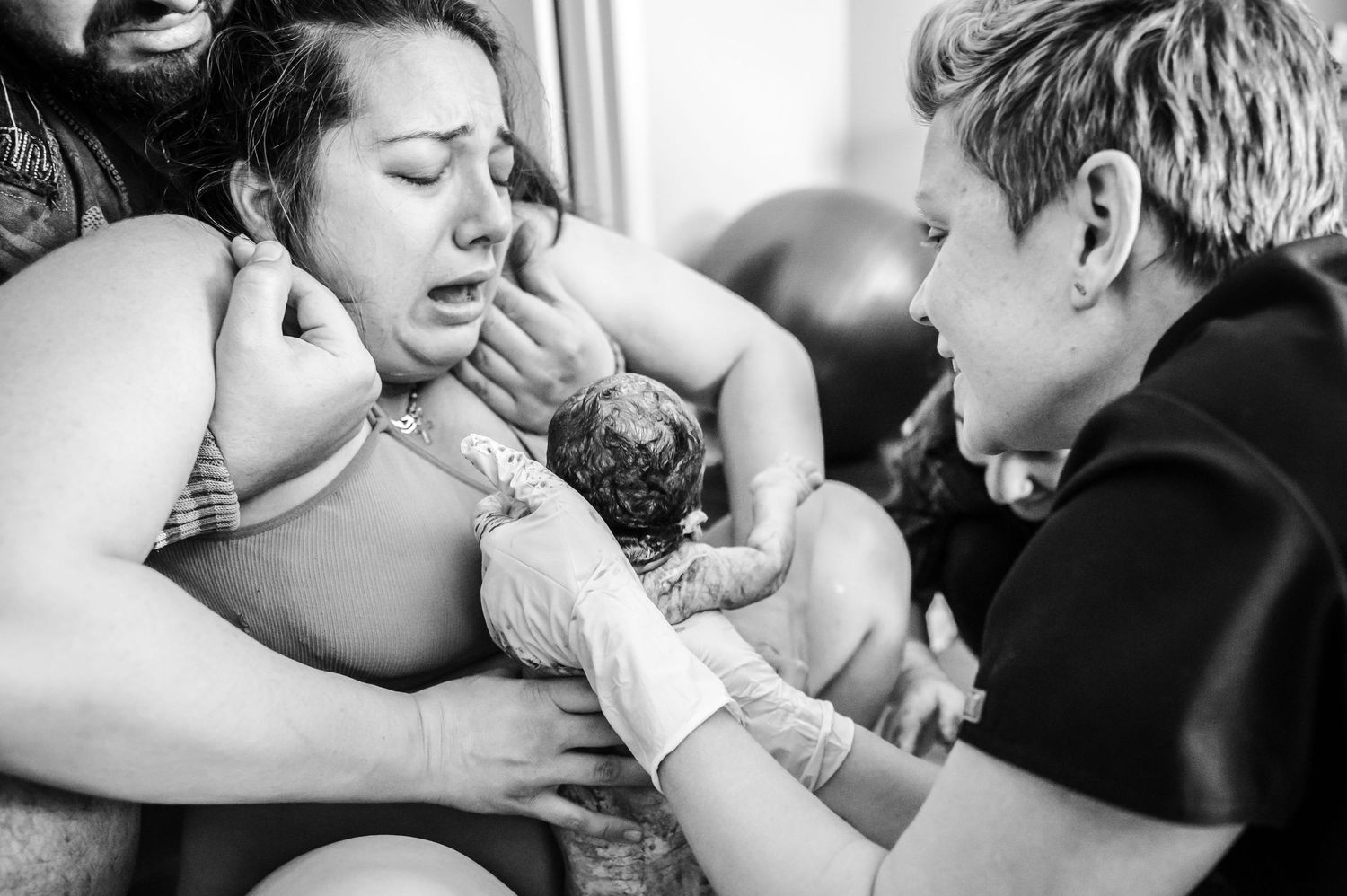
Your birth is always attended by a Licensed Midwife, along with either a trained birth assistant or a second midwife.
We work as a team to care for both you and your baby. One of us remains focused on you throughout labor, while the other is prepared to support your baby’s transition after birth and assist wherever needed. This allows for attentive, continuous care for both of you.
You are also welcome to have additional support people present, such as a partner, family members, children, or doula. We aim to create a space that feels calm, supported, and aligned with what you need for your birth.
What do midwives bring to a home birth?
We bring the medical equipment and supplies needed to support both normal birth and unexpected situations.
This includes IV supplies, IV antibiotics, oxygen, equipment for monitoring vital signs, newborn resuscitation equipment, medications to manage postpartum bleeding, and sterile instruments for repair if needed, including local anesthesia. We also carry newborn medications such as vitamin K and antibiotic eye ointment.
Beyond equipment, we bring experience, clinical judgment, and a steady presence. Much of our role is attentive and observant, supporting the natural flow of labor while staying prepared to step in if needed.
What about pain medication?
We do not offer epidurals or hospital based pain medication in the home setting.
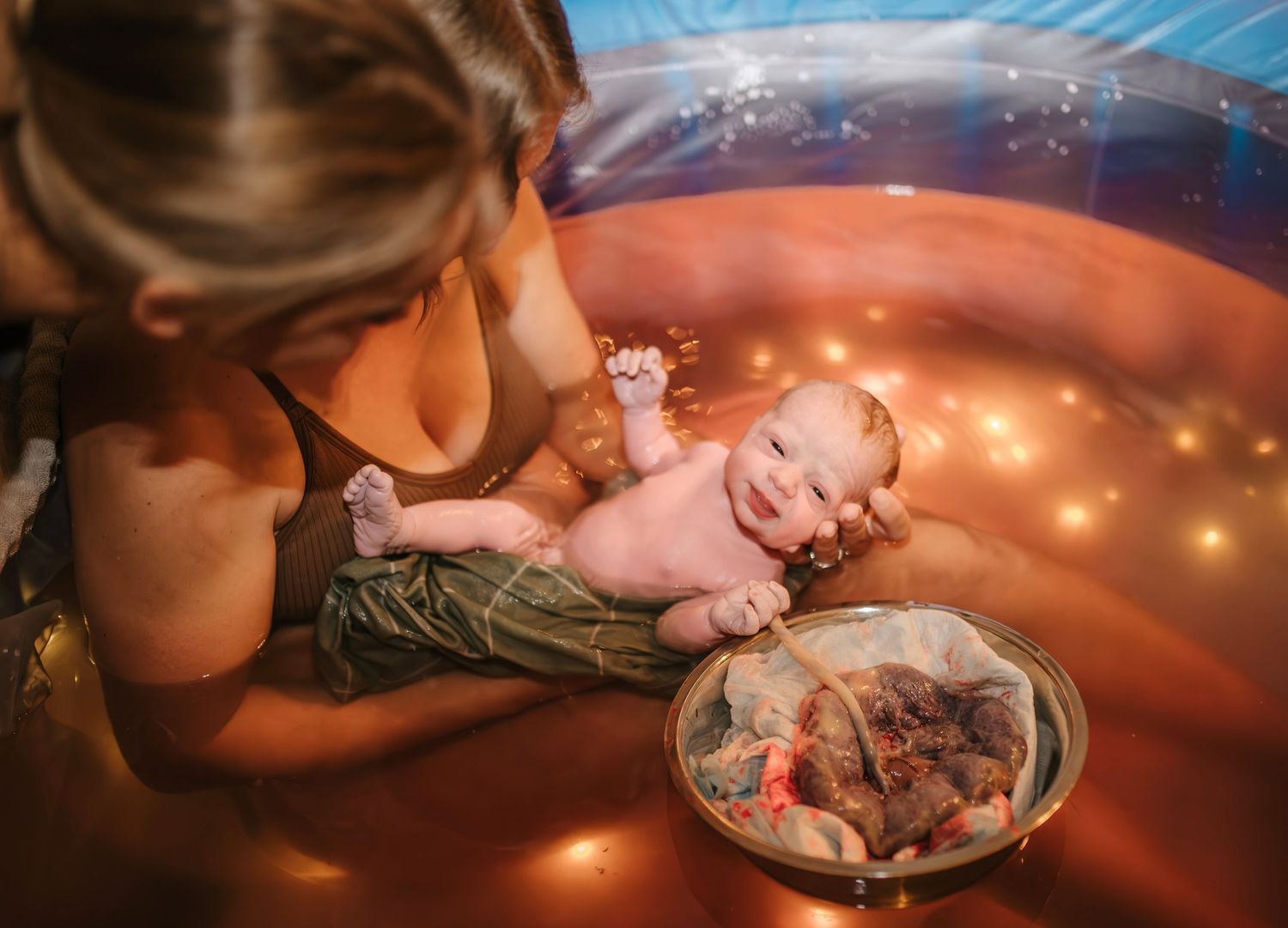
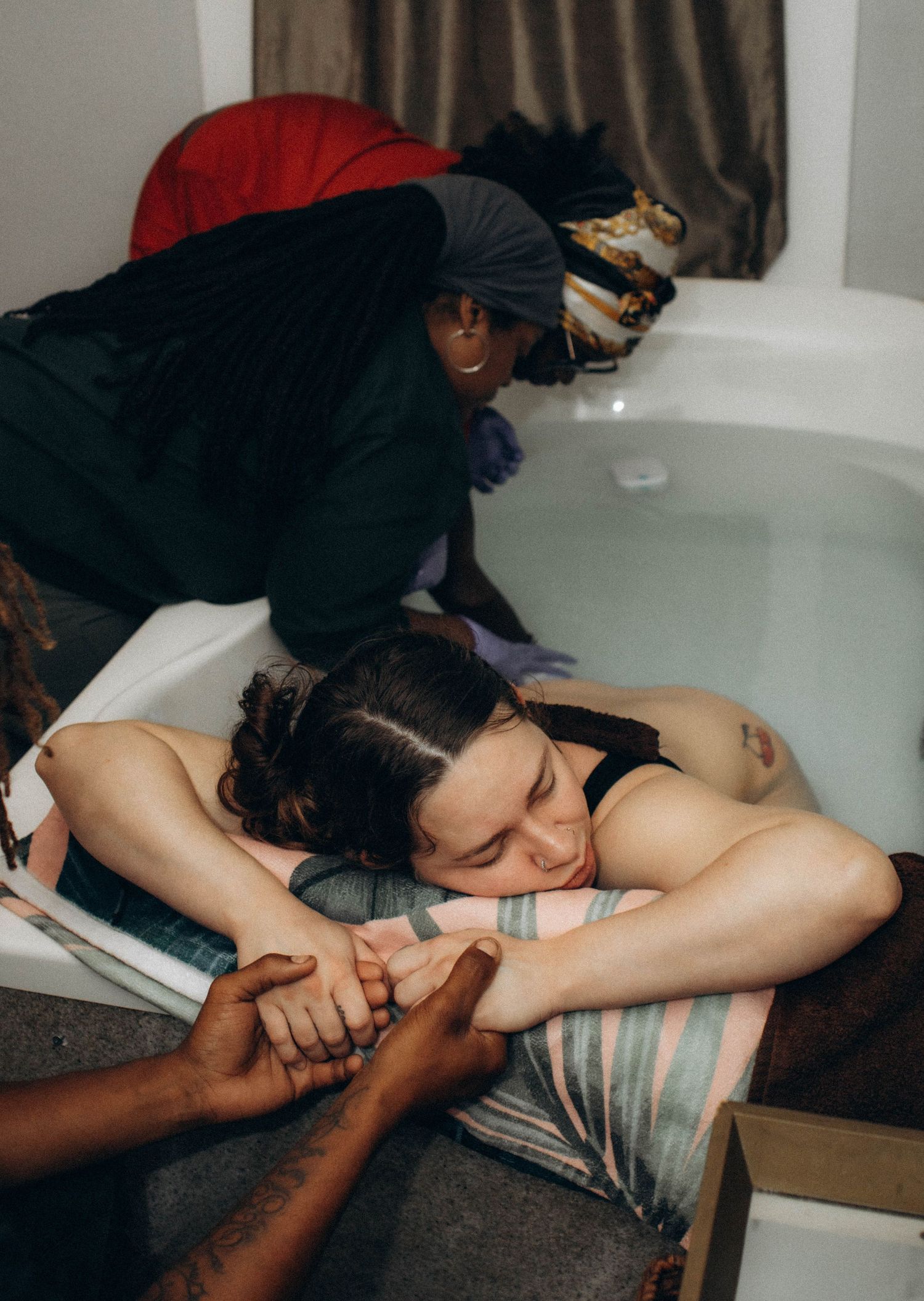
Instead, we prepare for labor together during your prenatal care. We spend time exploring and practicing comfort techniques that feel most supportive for your body. This can include movement, position changes, water immersion, breathwork, massage, and creating an environment that supports your nervous system. We also incorporate the use of herbs and homeopathic remedies when appropriate.
When labor unfolds in a space where you feel safe, supported, and free to move, eat, rest, and follow your body’s cues, your body releases its own natural pain relieving hormones. These hormones work with the rhythm of labor, helping you stay present and move through each phase. Many people find that being in their own environment, surrounded by familiar space and trusted support, allows the body to soften and respond more fully to the process.
During labor, we guide and encourage these techniques while focusing on the clinical care of you and your baby. Many families also choose to have a doula for continuous, hands on support.
We do offer local anesthesia, such as lidocaine, if any tissue needs to be repaired after the birth.
If at any point you decide you would prefer medical pain management, we will talk through that with you and support a transfer to the hospital. You are always part of the decision making process.
What happens if I go past my due date?
It is very common for pregnancy to continue beyond the estimated due date. That date is a general guide, not a deadline.
As you move past your due date, we continue to see you regularly and keep a closer eye on both you and your baby. We monitor things like your baby’s movements, heart tones, your overall well being, and any changes in your body as it prepares for labor.
We talk through your options together along the way. Some families choose to wait for labor to begin on its own, while others explore ways to gently support the body in starting labor. Our approach is to keep you informed, supported, and involved in decision making.
If at any point there are concerns about continuing the pregnancy safely at home, we will talk through that clearly and help guide you toward the safest plan of care.
The goal is not to rush your body, but to support a safe and appropriate timing for your unique pregnancy.
When do you go on call and how does that work?
We go on call for you at 37 weeks and remain available through your birth.
During this time, one of your midwives is always available by phone and ready to come when labor begins. We structure our schedule so that we are able to be fully present for births, without being overextended.
Because we work as a team, you are supported by midwives who know you and your care. This allows us to provide consistent, reliable coverage while still maintaining a relationship based model.
Our goal is that when the time comes, you feel confident that someone who knows you will be there, ready to support you.
What is included in your care?
Our care is designed to support you through pregnancy, birth, and the postpartum season with relationship-based, individualized care.
Throughout pregnancy, visits take place in your home and are intentionally unhurried, allowing space for both clinical care and meaningful conversation. We monitor your health and your baby’s development, offer standard labs and screenings, and provide education and guidance so you feel informed, supported, and connected to your choices.
Beginning at 37 weeks, we are on call for you around the clock, offering support and availability as you move closer to birth.
When labor begins, we come to you. Your birth is attended by a Licensed Midwife alongside a trained birth assistant or second midwife. We bring the equipment, medications, and supplies needed to support physiologic birth while remaining prepared for unexpected situations, all while holding a calm and steady presence in your space.
Care continues well beyond birth. Postpartum visits take place in your home through six weeks, with additional virtual support available as needed. During this time, we support your healing, feeding, emotional wellbeing, and transition into life with your new baby while also assessing your baby’s growth and adjustment.
This is continuous, relationship based care rooted in trust, connection, and support. You are known and cared for throughout the entire journey, not simply during the birth itself.
What does postpartum care look like?
After your baby is born, we remain with you in your space to support those first hours together. We stay for a minimum of two hours after birth to make sure you and your baby are stable, feeding is established, and you feel settled.
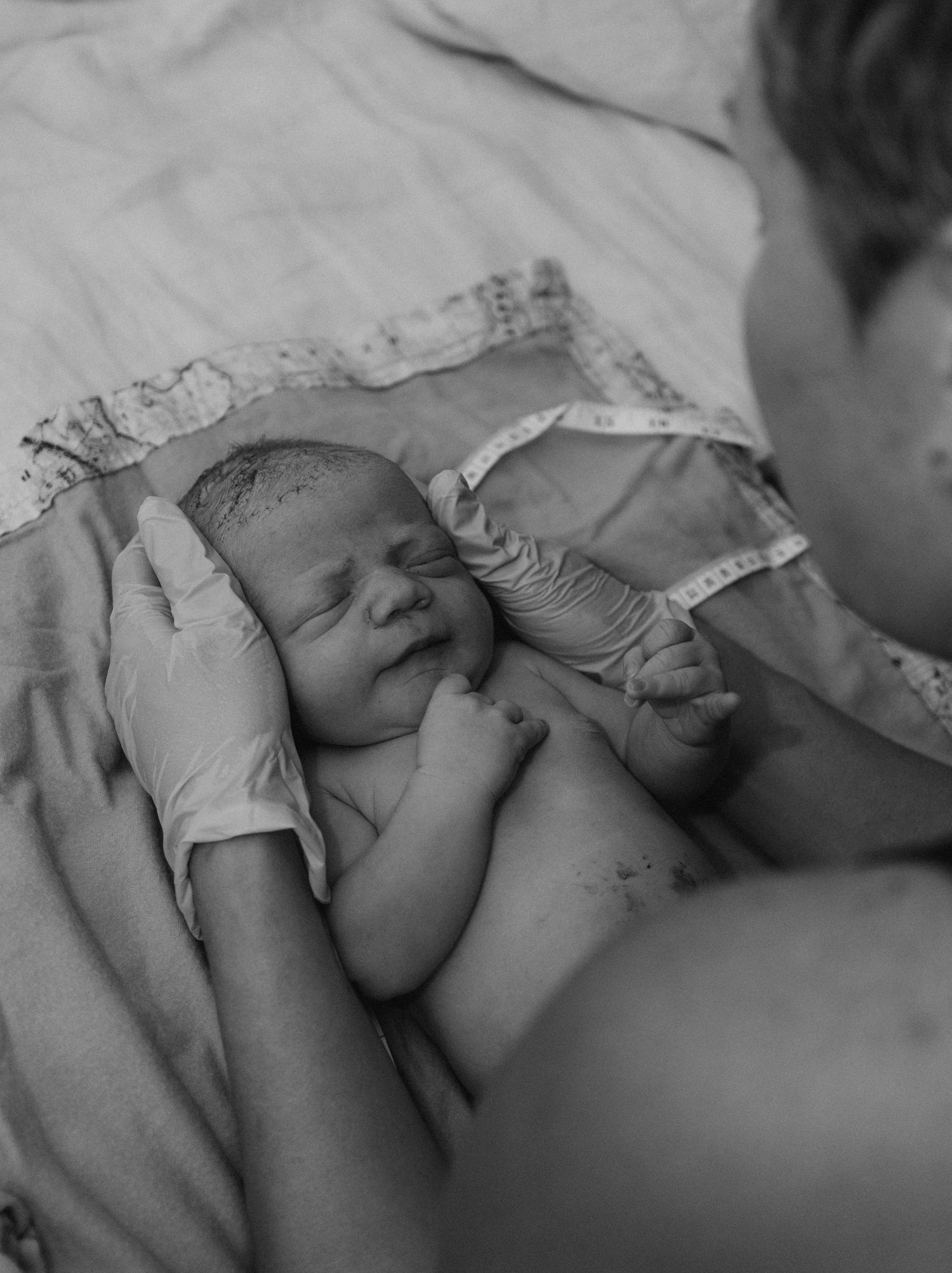
Your baby’s initial exam is done right there with you, often on the bed, so you can stay close and connected during that first time together.
In the days and weeks that follow, we continue care in your home. We check in on your healing, monitor your baby’s growth and well being, support feeding, and make space for questions, emotions, and the adjustment into this new season.
Our visits are spaced to support this transition, beginning within the first day or two after birth and continuing through the following weeks.
We also work closely with other trusted providers when needed, including pediatric care, chiropractic support, lactation, and mental health care, helping you build a well rounded circle of support around you.
This season is not meant to be navigated alone. You deserve to be cared for, too. Our role is to make sure you feel supported, seen, and held as you settle into life with your baby.
Do you offer payment plans or accept insurance?
We offer payment plans, with the full balance due by 36 weeks of pregnancy.
We work with a biller who can help submit for possible reimbursement through your insurance plan, depending on your coverage.
We also accept HSA and FSA funds, which many families are able to use toward the cost of care.
Many families are surprised to learn that out of pocket costs for hospital birth can be similar or higher, depending on insurance coverage and billing.
We understand that investing in this kind of care can feel significant. When needed, we can explore more flexible options and offer in house financing on a case by case basis. We are always open to talking through what feels manageable for your family.
What happens if I need to transfer to the hospital?
Your safety and your baby’s safety are always the priority. If something comes up during pregnancy or labor that makes hospital care the safer option, we will talk through it with you clearly and recommend transfer.
Most transfers are not emergencies. They are thoughtful decisions made with time to move calmly and intentionally. In those cases, we help guide the process, communicate with the hospital team, and make sure your records are shared so your care continues smoothly.
If a more urgent situation arises, we are trained to respond quickly and effectively. We carry the medications and equipment needed to manage emergencies such as postpartum bleeding or supporting a newborn’s transition, and we are trained in skills like neonatal resuscitation and emergency stabilization. We begin care immediately, call ahead, and coordinate transport so you receive timely support.
Once you are in the hospital, your care is managed by the hospital team. While we do not take over medical care in that setting, we remain present as support. We help you understand what is happening, talk through decisions with you, and stay connected to your experience.
Often, this is when your midwife is needed most. When things do not go according to plan, we remain a steady presence, helping you navigate the shift while feeling informed and supported.
We continue to care for you through the postpartum period, so you are not navigating that transition alone.
The goal is always the same. To make sure you are in the right place for what you need, while feeling supported every step of the way.
Do I need to have a house for a home birth?
No! Home birth does not require a house. It simply means giving birth in a space where you feel safe and comfortable.
Many families choose apartments, condos, townhomes, RVs, or even temporary spaces like an Airbnb. What matters most is that the environment is clean, accessible, and allows enough room for you to move freely and for us to safely care for you and your baby.
During your prenatal visits, we will talk through your space together and make sure it is a good fit for a safe and supported birth.
We also take care to protect and respect your space. We use waterproof coverings and bring everything needed to keep the area clean during birth. Afterward, we handle cleanup, including the breakdown and packing of the birth pool, so your space is left feeling calm and cared for, often as if nothing ever happened.